OpenAI didn't just acquire a talk show. It declared that the new frontier of the AI race is not technology — it is who controls the story.
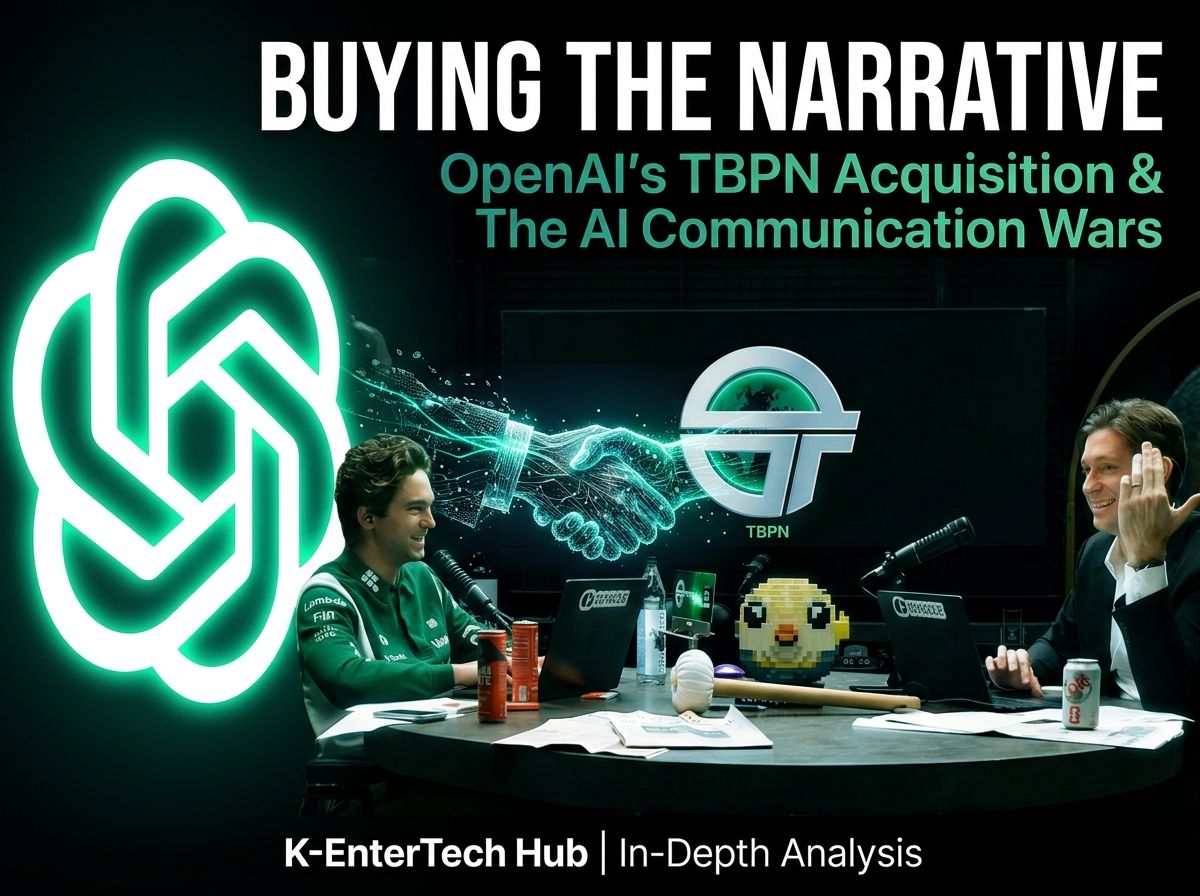
▲ TBPN (Technology Business Programming Network) — Silicon Valley's daily live tech talk show, weekdays 11am–2pm PT [Source: TBPN]
OpenAI has acquired TBPN — the live-streaming tech talk show that every Silicon Valley CEO has spent the past 18 months clawing to get onto. The deal, for an undisclosed sum, is not a media investment. It is a strategic declaration. As public skepticism about AI accelerates — from environmental groups to Senator Bernie Sanders's labor rights campaigns to the backlash over OpenAI's Pentagon contract — the company has concluded that the traditional PR playbook is structurally broken.
The answer is not better messaging. It is owning the room where the AI conversation happens. By acquiring TBPN, OpenAI moves to vertically integrate the production, distribution, and consumption of AI discourse itself.
Why OpenAI Abandoned the Standard PR Playbook
The strategic architecture of this deal is explained most plainly by Fidji Simo, OpenAI's CEO of AGI Deployment and the executive who championed the acquisition. In an internal memo to staff, she wrote: "The standard communications playbook just doesn't apply to us. We're not a typical company. We're driving a really big technological shift. And with our mission to ensure artificial general intelligence benefits all of humanity comes a responsibility to help create a space for a real, constructive conversation about the changes AI creates — with builders and people using the technology at the center."
What Simo saw in TBPN was not audience scale but marketing instinct. She said she was impressed by the team's ability to read where the industry was going and wanted to leverage their talent outside the show to change how the public perceives OpenAI's technology. TBPN will sit inside OpenAI's Strategy organization, reporting to Chief Global Affairs Officer Chris Lehane — the executive who oversees communications and policy. The show will wind down its advertising operations.
Two specific pressures accelerated this move. First, an internal vacuum: OpenAI's head of communications departed in December 2025, leaving the company without a clear messaging strategy as the regulatory and reputational environment was deteriorating. Recruiters were dispatched to fill the role. Second, a public miscalculation: Sam Altman publicly acknowledged that he had "miscalibrated" the degree of public mistrust following OpenAI's deal with the Pentagon in February 2026 to provide military services. Prominent backers including Marc Andreessen and Peter Thiel had been arguing that mainstream media systematically mischaracterizes the tech industry — a view that circulated internally at OpenAI. The acquisition is the company's structural response to both pressures.
"'One thing that's become clear is that the standard communications playbook just doesn't apply to us. We're not a typical company.' — Fidji Simo, CEO of AGI Deployment, OpenAI"
What Is TBPN — and Why Does It Have This Much Power?
TBPN is a three-hour daily livestream hosted by entrepreneurs Jordi Hays (29) and John Coogan (36), broadcasting weekdays on X, YouTube, Spotify, Apple Podcasts, LinkedIn, Substack, and Instagram. The show launched in October 2024 and was described by The New York Times as "Silicon Valley's newest obsession." Its formula — treating Silicon Valley corporate moves like a Fantasy Football league, covering executive hires, M&A, IPOs, and funding rounds with sports-ticker energy — resonated immediately. Regular guests have included Sam Altman, Palantir's Alex Karp, Meta's Mark Zuckerberg, and Microsoft's Satya Nadella. Peak simultaneous viewership has reached around 130,000.
The show's credibility rests on its founders' authentic insider status. Coogan co-founded Soylent — the coder-culture nutritional drink — securing funding from Andreessen Horowitz and Google before eventually selling to a global food conglomerate. Hays founded Party Round, a crowdfunding VC platform that rose during the ZIRP era before being acquired by another company in 2024 as rates rose. Both have lived the full Silicon Valley founder arc: hype, institutional backing, adversity, exit. As Hays put it: "Imagine being 25, raising money from Andreessen and Google, and then two years later getting ham
📎 Read full article on K-EnterTech Hub →
About K-EnterTech Forum · K-엔터테크포럼
K-EnterTech Forum (K-ETF, K-엔터테크포럼)은 엔터테인먼트 테크놀로지, K-콘텐츠, 한류, 미디어 정책 분야의 전문 인사이트를 제공하는 국내 대표 플랫폼입니다. K-팝·K-드라마·K-푸드·K-컬처와 AI·스트리밍·크리에이터 이코노미·방송 기술의 공진화(Co-Evolution) 전략을 연구하고, 국내외 포럼·행사를 통해 정책 및 산업 협력 의제를 이끌고 있습니다.
K-EnterTech Forum is Korea's leading platform for insights on entertainment technology, K-Content, Hallyu, and media policy — bridging Korean cultural industries with global technology trends.
고삼석 상임의장 · Chairman Samseog Ko
고삼석(Ko Samseog)은 K-EnterTech Forum 상임의장입니다. 동국대학교 첨단융합대학 석좌교수이자 국가인공지능전략위원회 분과위원으로, 30년 이상의 방송통신 정책 및 산업 경험을 바탕으로 K-콘텐츠와 글로벌 엔터테인먼트 기술의 융합을 선도하고 있습니다. 前 방송통신위원회 상임위원을 역임했으며, ZDNet Korea에 정기 칼럼을 연재 중입니다.
Samseog Ko is the founding Chairman (상임의장) of K-EnterTech Forum. He is a Distinguished Professor at Dongguk University and a member of Korea's National AI Strategy Committee. Former Commissioner of the Korea Communications Commission (KCC).
📩 familygang@naver.com | 🌐 entertechfrum.com | 고삼석 상임의장 소개 →


