![[Samseog Ko's Insight]In the AI Era, the Future of K-Pop Is Share Reality](https://cdn.media.bluedot.so/bluedot.kentertechhub/2026/05/mrmb17_202605250529.jpg)
Dr. Samseog Ko
Distinguished Professor, College of Advanced Convergence, Dongguk University
Member of the Presidential Council on Artificial Intelligence
Over the past three decades or more, K-pop has grown into the most influential global cultural brand among the content Korea has produced. It started out as ordinary music, yet today K-pop has built a powerful “cultural ecosystem” in which video and performance, fandom and platforms, community and cutting-edge technology come together for audiences around the world to consume and take part in. K-pop has become both a flagship export industry in the content sector and a core asset of the national brand.
Distinguished Professor Samseog Ko, who delivered a keynote speech at the K-Entertech Summit held at WIS2026 in Seoul in late April
AI Arrives, and the Real Question Shifts
Today, however, K-pop is facing yet another massive inflection point. At the center of this challenge stands artificial intelligence (AI). Generative AI is already producing countless pieces of music. It creates videos on its own, designs choreography, and gives birth to virtual artists such as virtual idols. What once required major entertainment agencies and dedicated production systems can now be done by individual creators. This is why some are saying that a “democratization of content production” has begun. The change is positive, yet at the same time it raises a fundamental question for the K-pop industry.
In an era when AI can compose music and anyone can produce content, on what basis will K-pop continue to be chosen by global audiences? How can it remain sustainable? Will it be better music, more dazzling visuals, or more powerful AI technology? Such elements will, of course, remain important for sustaining K-pop’s competitiveness going forward. But they are necessary, not sufficient, conditions for that sustainability. The competition ahead is likely to be not a contest over content production but, perhaps, a contest over the experience of content users. And at the very center of that contest sits Share Reality.
With Kim Hyungsuk, a “legend of K-pop,” serving as composer and producer, he will collaborate with the University of Oxford to develop educational programs based on K-pop and K-culture.
What “Share Reality” Means
Share Reality is not yet a familiar concept in Korea. Put simply, it refers to a structure or situation in which many people, while located in different spaces, experience things together as if they were all in the same place. Share Reality is not the kind of immersion in which one person dons a VR headset alone.
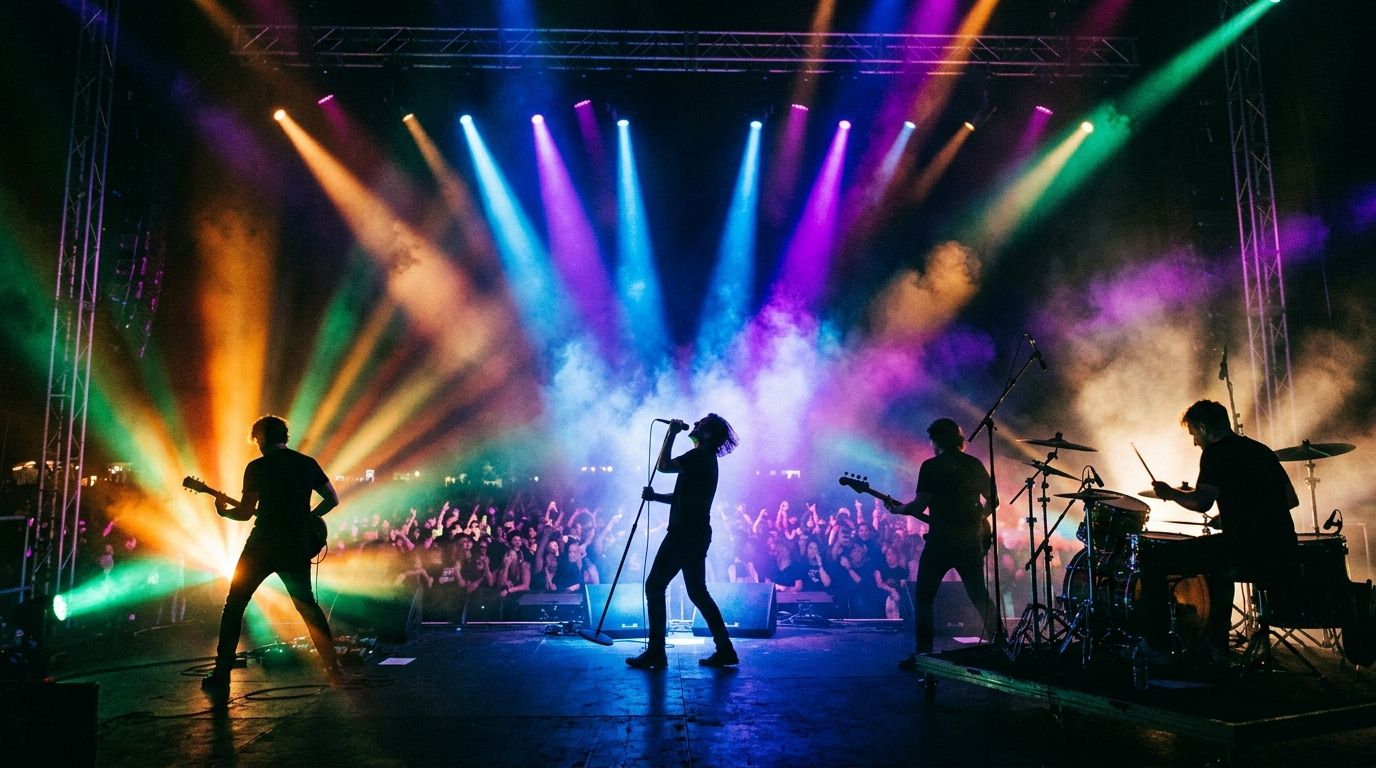
Rather, it is a mode in which large numbers of people experience a single reality at the same time through concert venues, theaters, extended reality (XR) spaces, even urban spaces, and real-time networks. What matters here is not the technology. It is the audience’s “sense” of feeling and enjoying the same moment together. Koreans, on reflection, are well used to experiences like this — the mass sing-alongs at K-pop concerts, the street cheering during the World Cup. Fans sharing emotion in real time while watching the same performance or sporting event has always been at the heart of popular culture. AI technology is now expanding such experiences in larger and more powerful ways.
Tokyo and Los Angeles Show the Way
Content-leading countries such as Japan and the United States are turning “technology-based experience expansion” into a new industry ahead of Korea. Live Viewing Japan, a Japanese company in which AMUSE INC. and Sony Music Entertainment Japan are among the shareholders, specializes in broadcasting major concerts, anime events, plays, musicals, and sporting events in Japan to cinemas and live houses across the country in real time via satellite relay and the Internet. Recently, the company also simulcast a K-pop concert held in Seoul to audiences in Tokyo through its “Live Viewing” service.
The core of this business model is not the simple relay of a concert or a sporting event. The real core is a strategy of “expanding the venue.” A concert held in Tokyo is watched at the same moment by fans in Seoul, Los Angeles, Paris, and Singapore.
Audiences do not merely look at the screen; they cheer and shout together, sharing a single experience. The performance or match takes place in one particular city, but the experience itself is created in many cities simultaneously. Here, revenue does not stop at ticket sales. Merchandise, memberships, communities, data, and repeat consumption all become interconnected. At this stage, the performance industry evolves into an experience industry.
The United States has gone a
📎 Read full article on K-EnterTech Hub →
About K-EnterTech Forum · K-엔터테크포럼
K-EnterTech Forum (K-ETF, K-엔터테크포럼)은 엔터테인먼트 테크놀로지, K-콘텐츠, 한류, 미디어 정책 분야의 전문 인사이트를 제공하는 국내 대표 플랫폼입니다. K-팝·K-드라마·K-푸드·K-컬처와 AI·스트리밍·크리에이터 이코노미·방송 기술의 공진화(Co-Evolution) 전략을 연구하고, 국내외 포럼·행사를 통해 정책 및 산업 협력 의제를 이끌고 있습니다.
K-EnterTech Forum is Korea's leading platform for insights on entertainment technology, K-Content, Hallyu, and media policy — bridging Korean cultural industries with global technology trends.
고삼석 상임의장 · Chairman Samseog Ko
고삼석(Ko Samseog)은 K-EnterTech Forum 상임의장입니다. 동국대학교 첨단융합대학 석좌교수이자 국가인공지능전략위원회 분과위원으로, 30년 이상의 방송통신 정책 및 산업 경험을 바탕으로 K-콘텐츠와 글로벌 엔터테인먼트 기술의 융합을 선도하고 있습니다. 前 방송통신위원회 상임위원을 역임했으며, ZDNet Korea에 정기 칼럼을 연재 중입니다.
Samseog Ko is the founding Chairman (상임의장) of K-EnterTech Forum. He is a Distinguished Professor at Dongguk University and a member of Korea's National AI Strategy Committee. Former Commissioner of the Korea Communications Commission (KCC).
📩 familygang@naver.com | 🌐 entertechfrum.com | 고삼석 상임의장 소개 →