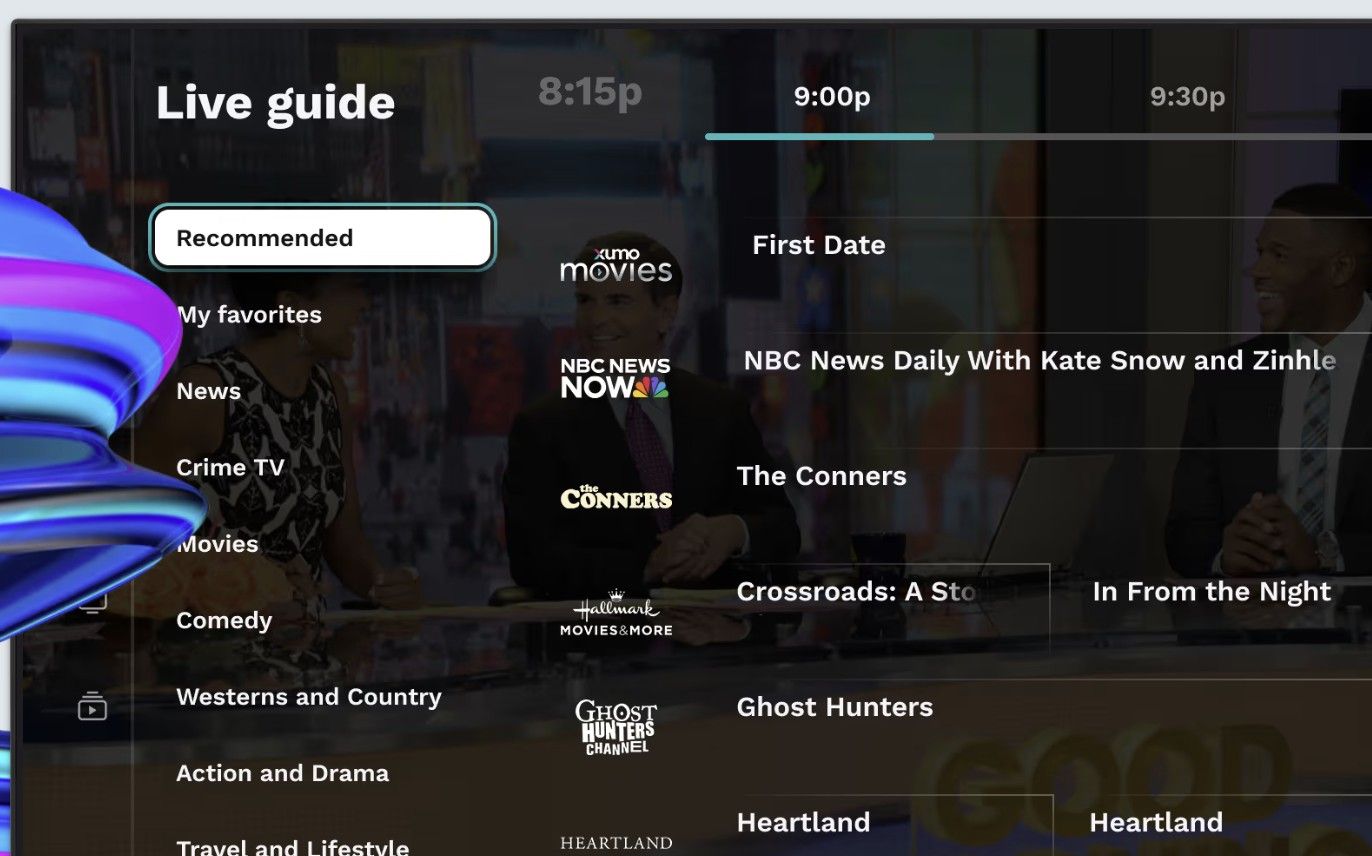
Samsung TV Plus posts the sharpest expansion of any platform (13 → 34 in two years); the same MSO–PP integration logic that built NBCUniversal and CJ ENM is now reshaping FAST.
As the FAST (Free Ad-Supported Streaming TV) market enters a phase of mounting financial pressure, owned-and-operated (O&O) channels have emerged as the industry's most strategically valuable asset. Unlike licensed third-party channels, O&Os are fully owned by the platforms that run them — generating advertising revenue with no profit-sharing obligation. Every ad dollar earned on an O&O channel stays inside the platform.
This is not a new model. It is the digital-era replay of the vertical-integration strategy that defined the cable TV industry in the 1990s and 2000s — when MSOs (cable operators) merged with PPs (programming networks) to capture margin and inventory under one roof.
The shift is structural. FAST is being squeezed simultaneously by three forces: slowing growth in ad rates, rising content licensing costs, and deteriorating economics for third-party channel aggregators. In that environment, the O&O model has effectively become the only durable margin-defense lever available to platforms.
According to FASTMaster Intelligence, the eight largest U.S. FAST platforms collectively operated 135 O&O channels in 2020, peaked at 311 in 2024, and settled at 303 in 2026. The headline number understates a deeper shift: the industry's center of gravity is moving from licensed-channel aggregation toward proprietary IP and proprietary brands — exactly the trajectory cable took a generation earlier.
[Figure 1] O&O Channel Counts by Major FAST Platform (2020 → 2026)
1. Why O&O Has Become a Strategic Asset
An O&O channel is one the platform owns outright. Unlike a licensed channel, the platform controls the content rights, programming, and ad inventory, and therefore owes no revenue share to a third party. In the early phase of FAST, growth was a channel-count race — whoever lined up the most carriage deals won shelf space. As the market matures, the key metrics have shifted to revenue per user (ARPU) and gross margin. O&O channels are essentially the only lever that moves both at the same time.
That structural shift has split the industry into two distinct strategic camps: traditional media companies with deep libraries that can channelize their own IP directly, and device manufacturers without deep libraries that must build differentiated channels through brand curation.
2. The Paramount Model: Channelize What You Already Own
Broadcasters and studios with large back catalogs have taken the most direct path: repackaging their existing content into channel form. The clearest example is Paramount on Pluto TV. As of 2026, Paramount operates 166 O&O channels on Pluto TV — by far the largest single-owner footprint on any FAST platform.
Pluto TV's total O&O count climbed from 121 in 2020 to a peak of 187 in 2024 before easing to 166 in 2026. The decline is not a retreat. Industry observers read it as an efficiency phase — pruning underperforming channels while reinforcing flagship IP-driven channels. Pluto TV is moving past the channel-count race and into a stage focused on viewing time and ad revenue per channel.
Freevee / Prime Video shows a similar pattern, edging from 35 channels in 2024 to 32 in 2026. With Amazon now leaning into its ad-supported Prime Video tier, the company's O&O FAST strategy is consolidating around fewer, higher-value channels rather than maximum breadth.
3. The Samsung Model: If You Don't Own a Library, Build a Brand
Device manufacturers, with relatively shallow proprietary libraries, have taken a different route: blending content from multiple licensed libraries under a proprietary platform brand — a curation-driven O&O model. The former Samsung Television Network was the prototype, packaging films, documentaries, and entertainment titles into platform-branded genre channels.
This model still involves revenue sharing with rights holders, but it produces differentiated viewing experiences that pure licensed-channel relays cannot replicate. Crucially, programming control and ad inventory remain on the platform side, so even with revenue sharing, the platform retains strategic control of the channel.
The numbers tell the story. Sa
📎 Read full article on K-EnterTech Hub →
About K-EnterTech Forum · K-엔터테크포럼
K-EnterTech Forum (K-ETF, K-엔터테크포럼)은 엔터테인먼트 테크놀로지, K-콘텐츠, 한류, 미디어 정책 분야의 전문 인사이트를 제공하는 국내 대표 플랫폼입니다. K-팝·K-드라마·K-푸드·K-컬처와 AI·스트리밍·크리에이터 이코노미·방송 기술의 공진화(Co-Evolution) 전략을 연구하고, 국내외 포럼·행사를 통해 정책 및 산업 협력 의제를 이끌고 있습니다.
K-EnterTech Forum is Korea's leading platform for insights on entertainment technology, K-Content, Hallyu, and media policy — bridging Korean cultural industries with global technology trends.
고삼석 상임의장 · Chairman Samseog Ko
고삼석(Ko Samseog)은 K-EnterTech Forum 상임의장입니다. 동국대학교 첨단융합대학 석좌교수이자 국가인공지능전략위원회 분과위원으로, 30년 이상의 방송통신 정책 및 산업 경험을 바탕으로 K-콘텐츠와 글로벌 엔터테인먼트 기술의 융합을 선도하고 있습니다. 前 방송통신위원회 상임위원을 역임했으며, ZDNet Korea에 정기 칼럼을 연재 중입니다.
Samseog Ko is the founding Chairman (상임의장) of K-EnterTech Forum. He is a Distinguished Professor at Dongguk University and a member of Korea's National AI Strategy Committee. Former Commissioner of the Korea Communications Commission (KCC).
📩 familygang@naver.com | 🌐 entertechfrum.com | 고삼석 상임의장 소개 →