
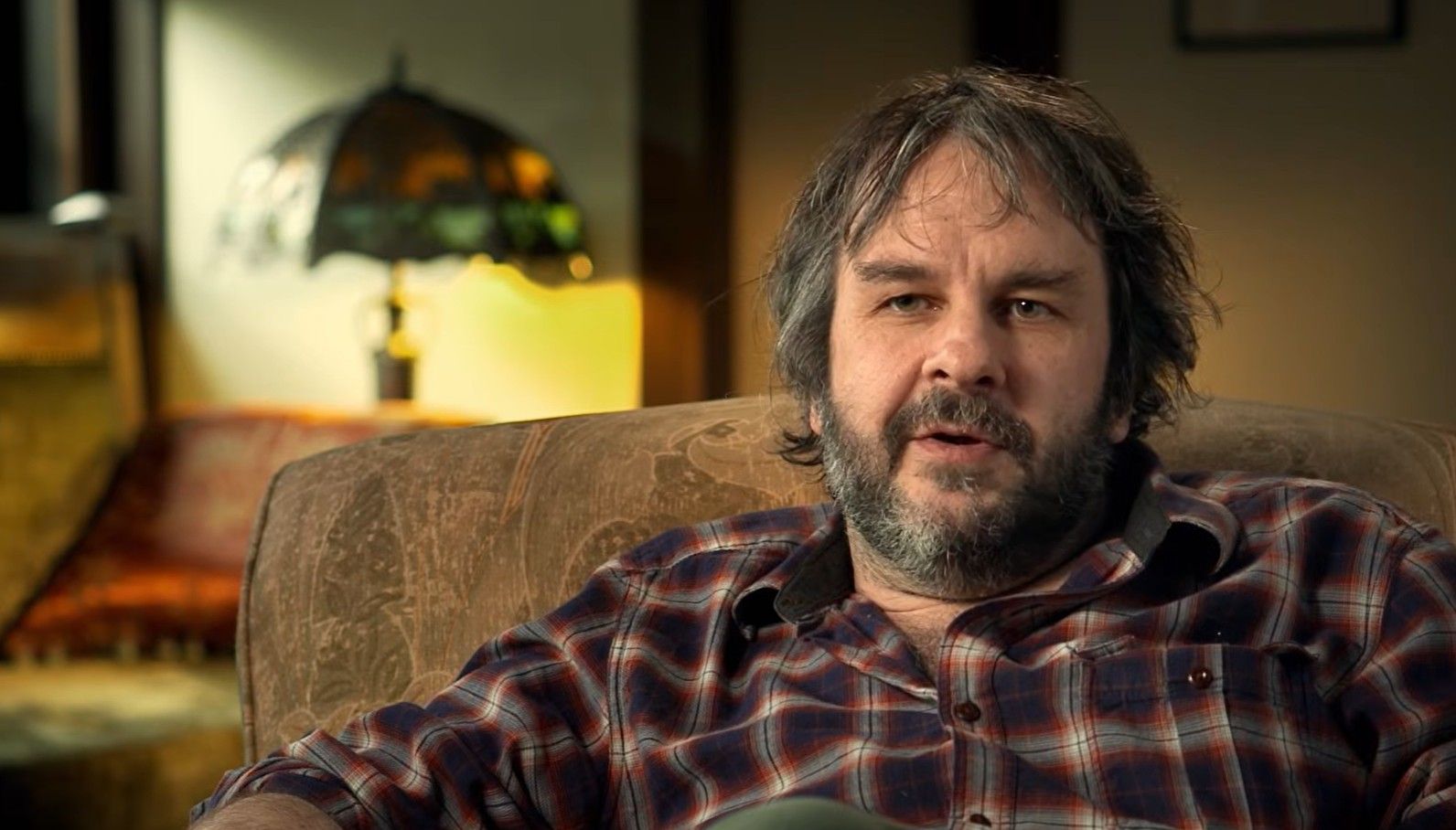
Honorary Palme d’Or laureate frames generative AI as a craft tool, but insists actor consent and rights licensing are non-negotiable
AI in film is not a threat but just another special effect — provided that any AI re-creation of an actor’s face has the prior consent of the person or their estate.
That was the position Peter Jackson laid out on May 13 at his Cannes Film Festival masterclass, the day after he received an honorary Palme d’Or. His “AI-as-tool” framing adds a new coordinate to a Hollywood debate that has remained polarized between “AI as replacement threat” and “AI as productivity tool” since the 2023 writers’ and actors’ strikes.
As generative AI reshapes production economics and tests the limits of actor likeness rights at the same time, the VFX revolutionary who ushered in the era of motion capture and digital characters with The Lord of the Rings used Cannes’s official stage to publicly side with the “just a tool” camp — under one non-negotiable condition.
“AI used in the right way is just a tool like any other tool,” Jackson told a packed Palais des Festivals. The decisive variable, he argued, is not the technology but the person directing it: “Is it actually interesting? Is it funny? Is it imaginative?
Has it been stitched together well to make a narrative, a story? Some people will make really, really great films, and some people will do the exact same process, and their film will be crap — just like normal films.”
Jackson reached for a historical analogy familiar to anyone steeped in fantasy cinema: the original 1933 King Kong and the Ray Harryhausen stop-motion films. “Those were done with stop-motion by a person moving a rubber creature,” he said.
“Why shouldn’t somebody on a computer using AI software be able to create their own imagery?” Coming from the filmmaker who rewrote the grammar of digital characters with Gollum and the armies of Middle-earth, the comment reads less as cheerleading for AI than as an attempt to locate the new technology within a continuous line of cinematic craft.
He drew a firm boundary, however, between film-industry applications and broader concerns about the technology. “I’m not talking about AI in general, like the thing that it might destroy the world,” he said. “To me, it’s just a special effect. It’s no different from any other special effect.” Across both The Hollywood Reporter and Variety accounts of the session, that “another special effect” framing was the phrase he returned to.
Peter Jackson
The condition came next. Reproducing an actor’s face with AI, Jackson said, requires the actor’s approval. “If you’re doing an AI duplicate of somebody, like Indiana Jones or anyone else, as long as you’ve licensed the rights off the person you’re showing, I don’t see the issue,” he said. “It’s when people’s likenesses get stolen and usurped.”
He placed that principle on the same footing as music and book rights. “You can’t play a song in a film unless you own the rights to that song. You can’t adapt a book unless you have licensed the book. So you shouldn’t be able to show somebody’s face through an AI technique without the approval of whoever it is — either the person themselves, or if they’re dead, their estate.” He added: “It’s pretty straightforward, really. I don’t see the concern about it.”
Jackson used the same platform to address a related and, for him, more personal grievance: the awards-season treatment of motion-capture performance. The case in point was Andy Serkis as Gollum. “A lot of the current environment, everyone’s so worried about AI … I don’t think a Gollum-type character or a generated character has any hope for winning any awards,” Jackson said. “Which is a bit unfair, especially in the Andy Serkis case where it’s not an AI-generated performance, it’s a human-generated performance 100 percent of the way.” His point: motion-capture acting is increasingly being lumped together with AI-generated characters in voters’ minds, costing it shortlist slots it has long deserved.
That same reading of Serkis explains why Jackson is not directing the next chapter of the franchise. Serkis is helming and starring in the forthcoming The Hunt for Gollum. “The film is about Gollum’s psychology and addiction,” Jackson said. “I thought, ‘Andy knows this guy better than anybody.’ So I actually didn’t think much of me directing it. I thoug
📎 Read full article on K-EnterTech Hub →
About K-EnterTech Forum · K-엔터테크포럼
K-EnterTech Forum (K-ETF, K-엔터테크포럼)은 엔터테인먼트 테크놀로지, K-콘텐츠, 한류, 미디어 정책 분야의 전문 인사이트를 제공하는 국내 대표 플랫폼입니다. K-팝·K-드라마·K-푸드·K-컬처와 AI·스트리밍·크리에이터 이코노미·방송 기술의 공진화(Co-Evolution) 전략을 연구하고, 국내외 포럼·행사를 통해 정책 및 산업 협력 의제를 이끌고 있습니다.
K-EnterTech Forum is Korea's leading platform for insights on entertainment technology, K-Content, Hallyu, and media policy — bridging Korean cultural industries with global technology trends.
고삼석 상임의장 · Chairman Samseog Ko
고삼석(Ko Samseog)은 K-EnterTech Forum 상임의장입니다. 동국대학교 첨단융합대학 석좌교수이자 국가인공지능전략위원회 분과위원으로, 30년 이상의 방송통신 정책 및 산업 경험을 바탕으로 K-콘텐츠와 글로벌 엔터테인먼트 기술의 융합을 선도하고 있습니다. 前 방송통신위원회 상임위원을 역임했으며, ZDNet Korea에 정기 칼럼을 연재 중입니다.
Samseog Ko is the founding Chairman (상임의장) of K-EnterTech Forum. He is a Distinguished Professor at Dongguk University and a member of Korea's National AI Strategy Committee. Former Commissioner of the Korea Communications Commission (KCC).
📩 familygang@naver.com | 🌐 entertechfrum.com | 고삼석 상임의장 소개 →